

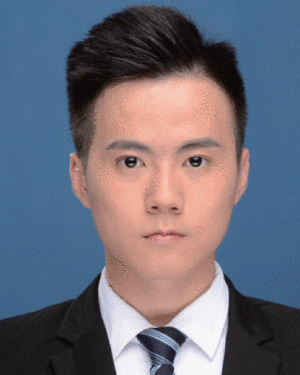
Tuo Wu
South China University of Technology, China
Dr. Tuo Wu received the B.Eng. degree in telecommunication engineering from South China Normal University, Guangzhou, China, in 2017, and the M.S. degree in wireless radio physics from Sun Yat-Sen University, Guangzhou, China, in 2021. He received the Ph.D. degree from the School of Electronic Engineering and Computer Science, Queen Mary University of London, U.K., in 2024. From 2024 to 2025, He was a Postdoctoral Researcher with the School of Electrical and Electronic Engineering, Nanyang Technological University, Singapore. From 2025 to 2026, He was a research fellow with the State Key Laboratory of Terahertz and Millimeter Waves, Department of Electronic Engineering, City University of Hong Kong, Hong Kong. He is now an Associate Professor with the School of Electronic and Information Engineering, South China University of Technology, Guangzhou 510640, China. Dr. Wu's research interests include fluid antenna system (FAS), reconfigurable intelligent surface (RIS), wireless localization and sensing. Dr. Wu is the Editors of IEEE TRANSACTIONS ON COMMUNICATIONS, and IEEE WIRELESS COMMUNICATIONS LETTERS. Dr. Wu serves as the Lead Guest Editor for IEEE COMMUNICATIONS MAGAZINE, the co-lead guest editor for IEEE WIRELESS COMMUNICATIONS MAGAZINE. Dr. Wu also served as the Guest Editors for IEEE TRANSACTIONS ON COGNITIVE COMMUNICATIONS NETWORKING, IEEE NETWORK MAGAZINE, and IEEE OPEN JOURNAL COMMUNICATIONS SOCIETY.
Scalable fluid antenna systems introduce an additional design freedom for source localization by dynamically adjusting the array aperture. This talk presents a two-stage framework for scenarios involving coexisting near-field and far-field sources. In the compressed configuration, central subarray selection mitigates mutual coupling and enables coarse direction estimation. In the extended configuration, an exact spatial geometry model supports joint refinement of source angles and ranges. Building on this framework, the talk examines source identifiability and information retention across array configurations, distinguishing the dimensional requirements of subspace methods from statistical recovery conditions. Information budgets and recovery error bounds are discussed under Gaussian observation models, together with the information potentially lost when sequential processing retains only coarse estimates. Joint inference from independent acquisitions and Joint-MUSIC based on calibrated coherent acquisitions are then introduced as complementary processing approaches. Representative simulations illustrate localization performance in near-field and mixed-field scenarios. The talk highlights how aperture reconfiguration, observation quality, and data retention jointly shape localization performance, providing insights into the design of scalable fluid antenna systems.